
Short answer first
Nine times out of ten, a garage door that won't open is caused by one of three things: a dead power source, a misaligned safety sensor, or a broken spring. The motor itself is rarely the real problem, even when it sounds like it's straining. A technician works through these causes in a specific order because the cheap, fast fixes get ruled out before anyone touches the spring system.
What the symptoms tell you
Before any tools come out, the symptoms narrow things down fast:
- Door is silent, nothing happens when you press the remote or wall button: usually power related.
- Opener motor hums or clicks but the door doesn't move: often a broken spring or a stripped gear inside the opener.
- Door opens partway, then reverses or stops: almost always a sensor or track obstruction.
- Door feels extremely heavy when lifted by hand: that's a spring, not an opener problem.
- A loud bang was heard earlier in the day, then the door stopped working: that's almost certainly a broken spring.
The order a technician checks things
1. Power to the opener
First check: is the unit plugged in, and has the outlet or breaker tripped? Afternoon storms and lightning common in this area can trip a GFCI outlet or breaker without anyone noticing until the door won't open the next time it's used. Remote batteries get checked here too.
2. Safety sensors
The two photo-eye sensors near the bottom of the track have to see each other in a clear, unbroken line. Humidity and condensation can fog the lenses, afternoon sun can blind them temporarily, and a knocked or shifted bracket breaks the alignment entirely. A quick wipe-down and realignment fixes this more often than people expect.
3. Manual lock or disconnect
If the red emergency release cord was pulled, or a side-mounted manual lock is engaged, the opener will run but the door won't move. This gets checked before anything mechanical.
4. Springs
Next comes the spring system, torsion springs above the door or extension springs along the tracks. A snapped spring means the opener has no help lifting the weight of the door, so it strains, hums, and goes nowhere. This is not a DIY repair; the springs are under heavy tension and require proper tools and bar setup to replace safely.
5. Cables and rollers
A frayed or snapped cable will often keep the door from moving evenly, or it'll hang crooked on one side. Moisture and, closer to the coast, salt air accelerate rust on cables and roller bearings, so older or unmaintained hardware fails sooner here than in drier inland climates.
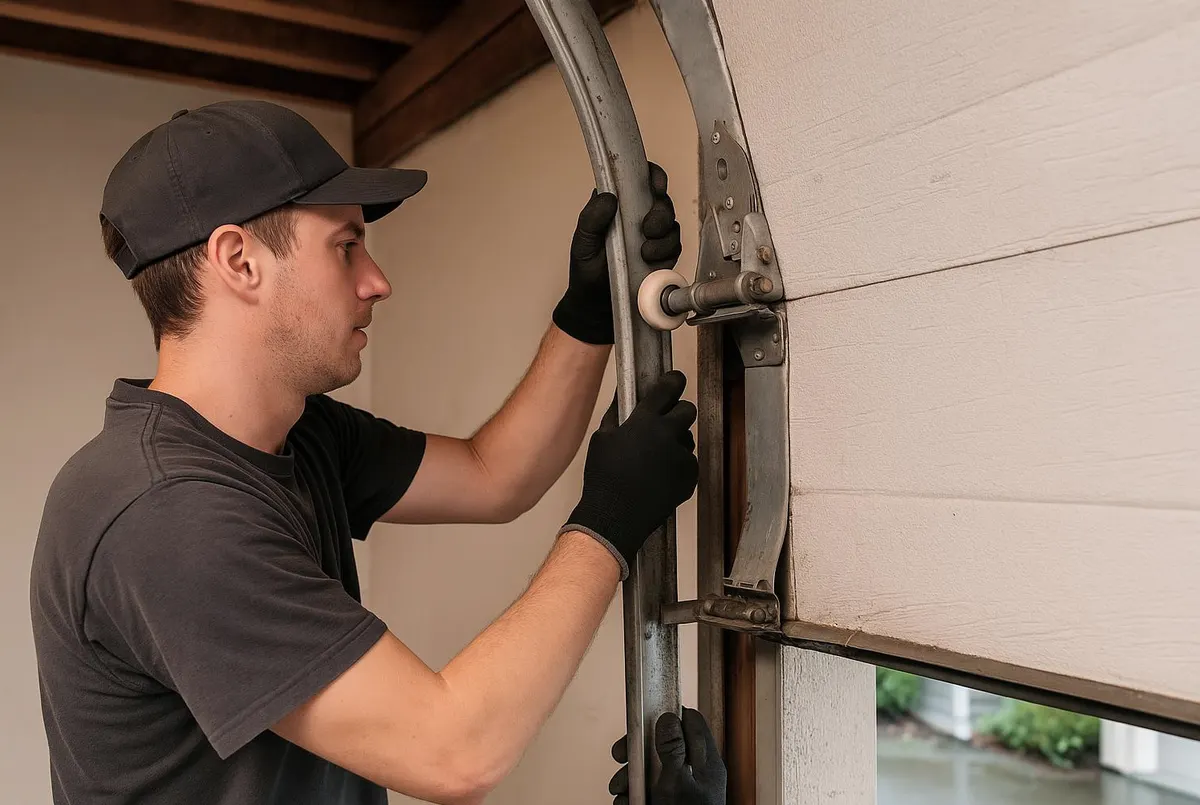
6. Tracks and rollers out of alignment
An off-track door usually shows a visible gap between the roller and the track, or the door looks tilted. Wood-composite doors can also swell slightly during the humid months, which changes how they sit in the track and causes binding.
7. Opener gears and motor
Last on the list because it's the least common failure point: a stripped plastic drive gear or a burned-out motor. If everything else checks out clean, this is where the opener itself gets opened up.
When to call Crescent City Garage Door
If the door feels unusually heavy, you heard a bang before it stopped working, or it's visibly crooked or off its track, stop trying to force it and call. Our Garage Door Spring Repair and Off Track Door Repair services cover the two causes that aren't safe to troubleshoot yourself, and we carry hardware rated for the wind-load and moisture conditions common throughout Putnam County. A technician can usually diagnose the real cause on the first visit rather than guessing.
If your garage door in Crescent City, Satsuma, Palatka, or anywhere nearby won't open, give Crescent City Garage Door a call for fast, honest diagnosis and repair.