
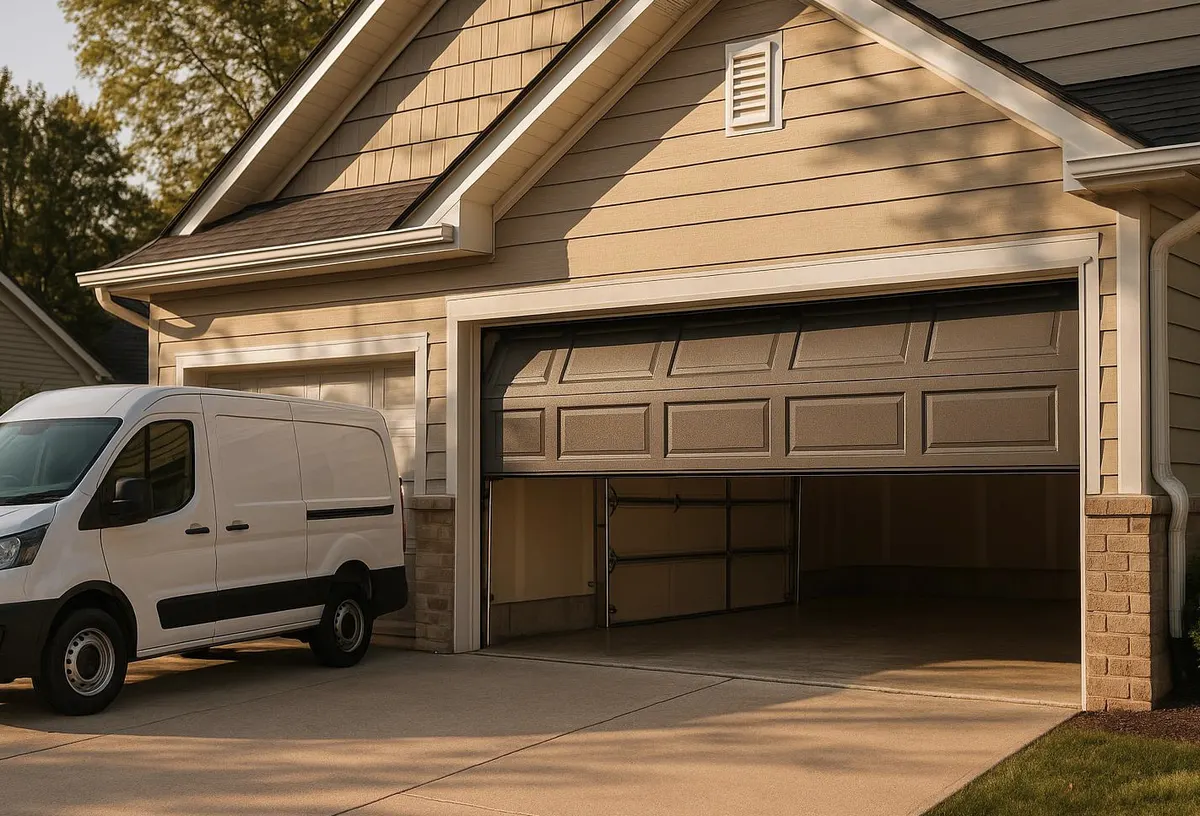
It happens the same way almost every time. One of you hits the opener remote on the way out the door, the garage door groans, jerks halfway up, and stops. Now you're standing in the driveway late for work, staring at a stuck door and asking the same question every renter in a Putnam County duplex or single-family rental eventually asks: whose job is this, ours or the landlord's?
Here's the short version you can actually text your spouse: in most rental agreements, the landlord owns the structure and the major mechanical parts, and the tenant owns day-to-day care and reporting problems promptly. But the details matter, and your actual lease is the final word, not this post. Read it before you argue about it.
What's Usually the Landlord's Responsibility
In most residential leases, garage doors fall under the same bucket as the roof, the HVAC system, and the water heater — major components that keep the home safe and functional. That typically includes:
- Broken springs — these wear out from age and cycles, not tenant misuse, so replacement is almost always on the owner.
- Opener motor failure — if the opener unit itself dies from age, that's mechanical failure, not something a tenant caused.
- Off-track doors from storm damage or structural settling — wind events and heavy rain are common here, and damage from a named storm or a tree limb is squarely a landlord repair.
- Rust and corrosion on tracks, hinges, or the door panel itself — humidity and salt air cause this kind of wear over years, and it's considered normal deterioration the owner is expected to maintain.
- Code or safety issues — a door that no longer reverses properly when it hits an obstruction, or one that doesn't meet wind-load expectations for the area, is a safety repair, not a cosmetic one.
What's Usually the Tenant's Responsibility
Tenants are generally expected to use the door correctly and report problems quickly, not pay for parts. That usually looks like:
- Reporting noise, slowness, or sticking right away instead of waiting months. A small problem caught early — like a fraying cable or a worn roller — is cheap. The same problem ignored for a year can turn into a door that falls off its track.
- Not jamming or forcing a stuck door. If it stops halfway and groans, that's a sign something's wrong internally, not a cue to yank harder. Tenants who force a stuck door open sometimes end up owning that repair.
- Keeping tracks reasonably clear of stored items, bikes, or yard tools that can knock the door out of alignment.
- Basic weather common sense — closing the door before a storm rolls in, not leaving it cracked open during heavy afternoon downpours, which is common practice here from June through November.
Where it gets gray is damage that's hard to trace to a single cause. A door that's rusted through on the bottom panel because of years of humidity and splashback could be called normal wear by one person and tenant neglect by another. This is exactly why a move-in inspection matters — it gives you a record instead of a guess.
The Move-In Checklist Nobody Does, and Should
Before you sign anything or unload the first box, walk out to the garage with your phone and take five minutes to check these:
- Open and close the door manually (pull the release cord first) and listen for grinding, catching, or uneven movement.
- Look at the springs above the door. Rust, gaps in the coils, or visible stretching are worth photographing and noting in writing to the landlord before move-in.
- Check the bottom panel and weatherstripping for cracking, warping, or gaps — humidity and heat cause garage door panels to swell or the seal to shrink over time, and that's an easy thing to miss on a quick walkthrough.
- Test the auto-reverse safety feature by placing a block of wood or a rolled towel in the door's path while it closes. It should stop and reverse immediately. If it doesn't, that's a safety issue worth flagging before you have kids or pets in the house.
- Look at the tracks for rust, bends, or loose bolts, especially if the home is closer to the coast where salt air accelerates corrosion.
- Photograph everything, including the remote and keypad, and send it to the landlord or property manager in writing. Email beats text for keeping a timestamp.
This isn't about being difficult with a new landlord. It's about not getting blamed later for a spring that was already rusted out when you moved in, or a track that was already bent from the last tenant's bumper mishap.
When to Call Crescent City Garage Door
If you're a homeowner trying to figure out what's actually wrong before you call your landlord or decide to fix it yourself, that's where we come in. We handle garage door spring repair for doors that are sagging, slow, or making that telltale loud bang from a snapped spring, and we offer garage door maintenance and tune-ups that catch rust, worn rollers, and misaligned tracks before they turn into an off-track door or a failed opener. A tune-up before hurricane season, or right after move-in, is a cheap way to get an honest answer about what's wear-and-tear versus what's actually broken.
If your garage door in Crescent City, Satsuma, Palatka, or anywhere else in Putnam County is sticking, grinding, or just not acting right, give Crescent City Garage Door a call. We'll tell you straight what's going on and what it'll take to fix it.